Thursday, 11 May 2017

Ethical, Legal and Contractual Obligations

Limitations and Obligations

Contractual:


A contract is a voluntary agreement between 2 or more parties, and are legal agreements that bind these parties into doing are being something. In the media industry there are different types of contracts, confidentiality and exclusivity. A confidentiality contract stops the signee from being able to openly talk about the project they are working on. On sets for TV shows, there are no cameras allowed or filming to be done of behind the scenes stuff so as to remove the chance of there being any spoilers leaked online. The contract may stipulate that the signee must pay a fee or be sacked from the project if they break the confidentiality agreement. An exclusivity contract is one that has 2 companies helping each other out by buying into each other exclusively. An example of this would be LOVEFiLM, who sign an exclusive multi-year deals with Sony, so that Sony may stream from LOVEFiLM, this means that LOVEFiLM can do the same thing again with other companies as well. A common exclusivity contract that can be seen used in film is when a film is being made about a book. In these examples a contract is signed between the author of the book and the production company making the film. An example of this would the Hunger Games movies that were based on a series of books written by Suzanne Collins, for which all the cast had to sign non-disclosure agreements and the production company and the author would sign exclusivity contracts so that only they could make a film on the book.

Employment legislation:

Employment legislation refers to all different kinds of employment rights, such as health and safety, sex, equal opportunities, trade unions and copyrights. Health and safety is arguably the most important of these, and all comes down to the employer. It is their responsibility to manage the safety of all people in their employment. In the film industry, this is the responsibility of the producer, investor or client. It was their idea to make the film, so everyone who works on it is their responsibility. The equal opportunities act is there to ensure an employer does not discriminate against someone for reasons such as; sex, pregnancy status, physical or mental health and many more. If any of these regulations are gone against, then the party that was damaged because of this can file a suit against the party that offended. They may then be forced to pay a fine or face a prison sentence in some more serious cases. There is also a set minimum wage for people who perform different tasks on set and these must be followed at all times and there must be equal pay between people of different genders. Employers are also required to give their employees certain things in exchange for their work, such as a safe, clean place of work, pay during sick leave, the right request breaks and training time. An example of an employee being treated unfairly would be Miriam O’Reilly, a former presenter of BBC show Countryfile. She was ousted from the show and replaced by a younger presenter, and she complained saying that she was replaced in ageist manner. She won damages and has changed the way TV shows operate for ever.


Ethical:
Ethical obligations are things like truth, liability, trust, privacy and serving the public interest. This can be things like guns being used in film; if someone isn’t very trustworthy then they most likely won’t be able to film with real guns, as you would need to have the police on site to deal with the guns. This is quite a tough thing to get around, as there aren’t really any ways of measuring trust or privacy.  In Britain we use the BBFC to regulate our film certificates, they classify each new film with a rating and this shows who should and shouldn’t watch it. The ratings are U, PG, 12A, 12, 15, and 18. Any film wanting to be released in Britain will have to be looked at and classified by the BBFC (British Board of Film Classification) or it can’t be shown in cinemas, regardless of what the American rating committee, the MPAA (Motion Picture Producers and Distributors of America), gave the film. Other things that must be considered are things like if someone identifies a specific gender, and whether you are treating all involved parties equally. Things like religious beliefs also need to be considered, as it can be very easy in this modern day to accidentally insult someone for their religious views, and this can cause a backlash if it is not treat appropriately.


Legal:
There are a lot of legal requirements in the media industry, not the least of which is copyright. A company needs to protect its own products, so a copyright is put in place to stop others from using it without being allowed to. Copyright can, however, also be applied to the application of an idea, rather than the idea itself. National security is another thing companies have to deal with in the industry, producers must be aware of things like The Official Secrets Act of 1911 and the Prevention of Terrorism Act, so as not to get on the bad side of the law and have their films cancelled. Trademarks are another of the many things a producer or employer must think about, if they accidentally show a trademarked name in a bad light they can get fined or lose out on deals, an example of this would be Guardians of the Galaxy 2, when they show the Microsoft Zune without permission and Microsoft had to ask for a reason why they weren’t asked first. If the director hadn’t issued an apology and a good reason why he used it, they would have most likely been fines or sued. Another legal point producers and employers must think about is the Broadcasting act of 1990, when Margaret Thatcher led to abolition of the Independent Broadcasting Authority and replaced it with the Independent Television Commission and Radio Authority, which have now both been replaced by Ofcom. The act basically changed who became the broadcasters of products on television and radio from the regulator to the actual radio and television companies. This allowed for the creation of a fifth analogue terrestrial channel, Channel 5, and the launch of 3 independent national radio stations. As stated, these have now been replaced by Ofcom, who have far more power, such as being able to fine people if they don't follow the rules set out. An example of this would be when they fined the BBC £400,000 for deceiving its viewers with fake phone-in competitions in 2008.

Developing Technologies

Developing Technologies in Film and TV
When TV and film was first becoming a commonplace thing, the technologies used were very primitive. At the initial rise to power for TV it only had one channel, commonly stated as coming around in 1928, W2XB. It was broadcast from the General Electric facility in New York and was more commonly known as WGY Television. It was a black and white channel, as everything was back then, and is now known as the American Channel 6. Because of the many technical limitations of the time, ranging from the manufacturing size of cathode ray tubes to a lack of materials to be able to make smaller components, people wanted to make things better. After the invention of the black and white television set people were immediately trying to make things play in colour, and experimented using three different monochrome images overlaid onto each other to produce a colour image. American TV powerhouse CBS began to work on making a colour TV set as early as 1940, almost 20 years after black and white was invented. Up until around the 1950’s there was only terrestrial broadcasting systems and this was one of the main factors that limited the creation of many channels. All of the channels that were around back then were what’s called analogue, meaning they used a wide wavelength to transmit a signal, and because of this there wasn’t room for many channels. Because it used what’s called a varying wave, any little interference would disrupt the quality of the audio and video. Things like bad weather or a faulty connection would make your TV set almost useless, and combining this with a lack of channels at the time, the only thing keeping people buying TV’s was the fact it was the hip new household appliance. At this point there was also the added limitation of having to use the cable system of broadcasting channels. This was done by passing the signal through coaxial cables, or more recently, light pulses through fibre-optic cables. To be able to watch a cable channel you must first be subscribed to the publisher, and then you would receive the ability to view their content, only after having a set-top box installed, and each separate TV set in each household will need their own individual set-top box installed if they all want to watch the same channel. Cable broadcasting would also need to be scrambled to reduce cable service theft. This is where digital, or satellite, television comes in, and is what almost everyone uses these days, simply because of how versatile it is. A viewer has no worries of a bad connection because it uses binary, a 1 and 0 system, in which a connection can only be on or off, not in between like analogue. This cancels the worry of a bad signal because binary is a non-variable system, meaning it can’t just change because of bad weather. On top of this it uses a much smaller wavelength, meaning you can create many more channels for it, allowing producers to go crazy with what they were creating, and giving the audience a much greater pool of things to watch, in turn leading to more people wanting to buy a TV set. The only real downside to using satellite TV is sun outage, where the sun lines up directly
behind the satellite broadcasting the signal, and the microwave radiation will drown out the satellites ability to transmit a signal. Since this is the only real danger satellite has of being interfered with, it is a much more popular form of broadcasting, however in America, cable is still much more popular than satellite because of the large land masses. It is also the only form of broadcasting available in remote areas of the world that do not have terrestrial broadcasting. The first satellite TV systems were a now obsolete form known as television receive-only. These systems would receive a weaker signal meaning you needed a much bigger satellite dish to use it, making them more expensive. In 2007 – 2012, the UK began the Big Switch, in which, by region, everyone changed from analogue to digital. All of this goes to show that the way we get our TV is always changing and evolving, but so is our way of watching TV, as is the case with things like pay-per-view and on demand and streaming services. Pay-per-view is a service that requires the viewer to pay an individual charge per programme they watch, usually in the range of around 5 dollars, but can go up to insane prices like 50 dollars for big events such as boxing championships or American football and baseball matches. Pay-per-view services work by telling everyone when the event will be broadcast and then taking everyone’s payment for the programme, and afterwards showing it to everyone at the same time. This can cause some annoyance with customers if the event is being broadcast in one time zone at midday but is on at 3 in the morning somewhere else. While certain companies don’t release specific numbers on how many people actually buy into a programme, industry insiders have stated that they can rise into the millions of people watching, as in the case of the MMA fight between Connor McGregor and Nate Diaz, where the buy rate (how many people bought into the service) was around 1.65 million, making the company an astounding 82.5 million dollars. This shows that pay-per-view events are a great way for producers to make money and to give the general audience a good time watching something. The antithesis to this would be something along the lines of Netflix or Amazon Prime, which are both on demand streaming services. On demand works by having a customer pay a fee, usually monthly but in some cases can be more or less frequent, and then the consumer will get a specific service each month until they change or cancel the service. When the streaming service was first created, it was used for something called Muzak and was used in stores to play music in the background. The most commonly known form of streaming would be live streaming online, in which a creator will announce a service and, sometimes, a time to watch it, and at that time will ‘come online’ and show in real time the service they advertised. Many actors and directors use these services such as Facebook's new Live feature to talk with a live public about an upcoming film or event, strengthening the bond between creator and audience. Producers caught onto the popularity of streaming pretty quick and decided they could monetize it and become quite successful, and so Netflix was created to capitalize on this.
Netflix charges around 7 dollars a month for unlimited streaming of available films and shows, and charges more for use on more TV sets and accounts. Netflix currently has around 98 million active users, and if they all pay for one month, it will result in Netflix as a company making around 686 million dollars, in one month, proving that this is a highly lucrative form of watching TV and films. Amazon leapt at the opportunity to rival Netflix and created Amazon Prime, a similar service that does basically the same thing as Netflix but also shows subscribers Amazon Prime original shows and films, similar to Netflix Originals. This all goes to show that the way we acquire our TV and film is constantly changing, but it is still advancing at an incredible rate, with this like Organic Light Emitting Diode (OLED) screens that allow users to bend and fold their TV screens like paper, or 3D TV’s, which allow the viewer to experience similar things to what they would need to pay extra for in cinemas. Things like DVD’s and HD DVD’s are also evolving to be sold with more features and more reasons to buy them. Certain TV channels also now have the ability to pause live programmes so that you can go away and come back later to watch it, and you can even record a programme to watch it at a later date. Panasonic have also revealed a new ‘see-through TV’ using OLED technology that allows a screen to turn into transparent glass when not in use, as well as some TV screens that can now turn into mirrors. This kind of advancement in technology is proof that the world of television and film is advancing at an incredible rate. The future is now.


Tuesday, 9 May 2017

The Business


The Business
Comparing Hollywood to Britain
Hollywood and British cinema obviously differ in many different ways, and in this post I will discuss a number of different ways they differ.
Funding Bodies
Funding bodies are extremely important in film; someone needs to pay for these films. In Hollywood it is somewhat obvious who pays for them, the production companies such as Warner Bros. or Universal, but it’s a bit more complicated in British cinema, as these massive companies don’t really exist here. For Hollywood the production company, whoever it is, will pay out of its own pocket for the film to get made and everyone to get paid, and will then take a cut of the proceeds when the film comes out. They will make money from its cinema release, DVD sales, soundtrack sales and whenever it gets rented and this money will all be put back into the pockets of the production companies so they can make more films. They also make money when the film is shown on certain TV channels if they have a contract or agreement for this kind of thing. An example of a production company that funds its own films would be Walt Disney Pictures, Disney’s film production company. They are the main producer of live-action films from Disney. ‘Pirates of the Caribbean’ is the studios most successful franchise, and has so far made $3.7 billion for Disney. The films have cost a total of $1.36 billion to produce so far, so not all of the money made by these films will have been profit, as almost half of it will have been used to actually make the films.  It’s all very basic in Hollywood, and very lucrative, but in the British side of the world it’s a little more complicated. As already stated, there aren’t really any huge British production companies to pay for these massive films to get made, which is one reason why British films are often on a smaller scale to Hollywood films. This leads to people finding ways to save money wherever they can, with tax breaks or legal loopholes. The BFI (British Film Institute) funds a lot of smaller independent films in Britain. They use money from the national lottery to help develop UK filmmakers as well as from donations and money from the Department of Culture, Media and Sport. They have complete control over who gets money, what films get funded by this money, and how much they get.
Technologies of Production
The technology used in the making of films in Hollywood is obviously going to be different than that used in making British films, mainly because of the difference in budget. Or Hollywood, it’s a drop in the ocean to pay the extra to film in IMAX as well as regular vision, but this would be almost impossible for a smaller budget independent film funded by the BFI, which is why you don’t see many IMAX British films.
Distribution and Exhibition
The distribution and exhibition of films in Hollywood is somewhat similar to that of British film distribution, with both requiring a distribution company to help. In Hollywood many of the
production companies will double as the distributor of the films they make, such as Warner Bros. and Walt Disney Pictures, because they have the experience, money and capacity to do this. Companies like this may also distribute films made by other production companies, such as ‘The Polar Express’, which was produced by Castle Rock Entertainment, but distributed by Warner Bros. Pictures. This is mainly how it works in the world of British film, a production company going to a distribution company. This is mainly because not a lot of the production companies in Britain have the money or capacity to act as the distributor of their own films, and will seek out the help of others. An example of this would be the film ‘This Is England’, a 2006 British film that was produced by Warp Films in collaboration with FilmFour Productions on a budget of £1.5 million, and distributed by Optimum Releasing. Another example of this would be the film ‘Snatch’, a 2000 British film produced by SKA Films on a budget of £10 million, but distributed by two different distribution companies, one in the UK and one in the US. It was distributed by Columbia Pictures in the UK and by Screen Gems in the US.
Stars
The use of stars is an obvious must in film, otherwise there would be no one in the films, and the stars you see in the massive Hollywood films often start out there life in the smaller scene of British film. A great example of this would be Jason Statham, who actually started life as a model and competitive diver. Once he was picked up by Guy Richie in ‘Lock, Stock and Two Smoking Barrels’ and subsequently ‘Snatch’ and ’Revolver’ Statham became a household name as the British anti-hero/villain, known for the fact that he does all the fight scenes in the films that he is in. Statham is a great example of the reason some people will watch specific films, because a specific actor is in it. When people go to see a film that has Jason Statham in it, they will expect lots of fighting and action, such as in ‘The Expendables 3’ and the ‘Transporter’ series. After the success of his early films, he went on to be featured in American films, such as the ‘Fast and Furious’ franchise and ‘The Mechanic’ series. Statham is a great example of how success in smaller independent British films can lead to bigger roles in bigger films in Hollywood. Another example would be Daniel Radcliffe, who shot to stardom after being the main lead in the ‘Harry Potter’ franchise as the boy who lived. These films were British/American made and starred a cast of almost all British actors. After these films both Radcliffe and Emma Watson rose to the spotlight and began being seen more in American Hollywood films.
Social and Political Issues
Social and political issues have been explored a lot in film and Hollywood and Britain are no different. One of the most classic representations of society and politics in film would be ‘1984’, a British film about the George Orwell novel of the same name. It is centred on the idea of a ‘big brother’ society in which everyone is watched and monitored and must comply with whatever the government wants. Although it was originally written in 1949, it has come quite close to reality recently, and was made into a film in 1956 and then remade in ‘1984’, ironically. Being a British novel by a British writer and then made into a British film by a British director show that British cinema has always been good at hitting hard on the political and social issues, though Hollywood is also good at it too. In 1996 a novel was written by Chuck Palahniuk which was later adapted in 1999 into the film ‘Fight Club’. It is about a nameless protagonist who is fed up with his dead –end white collar job and, after meeting Tyler Durden on a plane, decides to set up an underground fight club as a form of radical psychotherapy. Compared with ‘1984’, ‘Fight Club’ is about far more American topics, such as being fed up with a dead end job, or destabilising the government, whereas 1984 is about darker topics, like a lack of individuality, and being forced to cooperate in a dead world. Both film industries, Hollywood and Britain, have touched on some heavy topics in society and politics, and both have done a great job at highlighting the issues with them, but I personally enjoy Britain’s concepts more, they are darker and scarier because of how real they are.
Regulatory Issues
Neither Hollywood nor British film are free form the grip of censorship and regulator laws, and some say it is even worse here than in any other form of media. In 1934 the MPPDA (Motion Picture Producers and Distributors of America) created the Production Code Administration (PCA) to help enforce the Motion Picture Production Code. In basic terms, this means that all filmmakers in America must submit their films for approval by the MPAA before they can be released in cinemas. At this point the MPAA had all the power to accept or decline a film’s release at any point, and in extreme cases, could even demand a script change, although this is rare. This is somewhat similar to the way the British film industry works, only instead of all films needing to go to the MPAA they instead go to the British Board of Film Classification (BBFC). The end goal is always the same though; make sure any submitted film meets the requirements set up by whichever imposing group and get the film a rating that fits with the script. The BBFC also has the statutory requirement to even classify some video games as of the video recordings act 2010, one major difference between them and the MPAA.

Thursday, 4 May 2017

Analyse That


Analyse That
Auteur Theory
The term auteur was first used in the film world at the back end of the 1940’s and was first coined in this context by American film critic Andrew Sarris. In basic terms it denotes that a film director is the main author of a film and it belongs to them. It is usually pointed out the most for people who have a distinct style, such as Tim Burton or Wes Anderson. Many films fall under the category of having been made by an auteur director, and a director can easily be recognised by the different kinds of shots or actors they use.
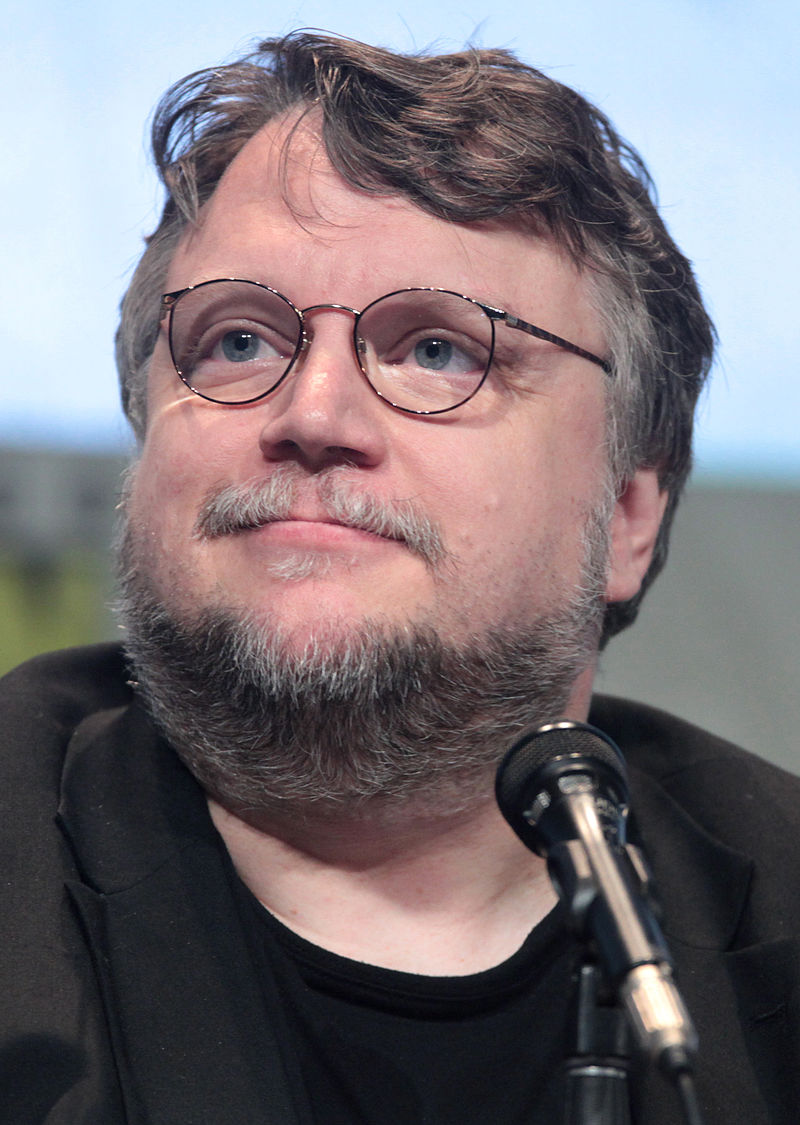
Guillermo del Toro by Gage Skidmore 3.jpg
For the purposes of this article I will be using the example of Guillermo Del Toro, who I believe is very much an auteur director. He has directed numerous well known and lesser known films, some English and some Spanish reflecting his Mexican/American life, such as; Hellboy 1 and 2, Pacific Rim, Pans Labyrinth and The Devils Backbone. Del Toro has a very distinct style. He often transitions between making big blockbuster Hollywood films to smaller Spanish films. Del Toro is a great example of an auteur director because you can immediately tell his films from any other director, dark fantasy settings with excellent practical effects, insectile imagery, clockwork, monsters, heavy use of amber lighting and some kind of religious subtext with the same recurring actors, all making Del Toro an auteur in my eyes. The effect that an auteur can have on the production is astounding, sometimes completely redefining the way the film looks, especially in cases of directors such as Del Toro and Tim Burton or Wes Anderson. When Del Toro creates the visual aspects of a film, he uses his previous experience in make-up and special effects to create the look he wants, using incredible practical effects rather than CGI to complete the look of the characters and monsters.


Image result for the pale manIn his most critically acclaimed film, Pan’s Labyrinth, he showcases all of the telling signs of a Del Toro film. The film takes place during the rise of fascism after the Spanish civil war in 1944, a dark setting for a fantasy film. This is one of Del Toro’s main aspects, setting his films in some dark setting and showing the dark beauty of a fairy tale in this time. The film follows Ofelia, a young girl whose stepfather is a part of the Falangist military. When they arrive at a new home, Ofelia discovers an overgrown labyrinth and explores it, discovering a faun who believes she is the reincarnation of an ancient princess of the underworld, and assigns her 3 tasks in order for her to acquire her immortality. So it’s quite a mouthful. It takes heavy inspiration from old fairy tales, showing the dark side of these to portray a sort of dark beauty in the fairy tales of old, one of Del Toro’s main points in his films. Throughout the film you can see traces of Del Toro’s signature style, in the look and design of the characters, using practical effects and make-up rather than CGI for the monsters, animatronics for the giant toad and minimal CGI for the tiny fairies. The use of practical effects, make-up and animatronics outweigh the use of CGI in this film, and most films by Del Toro. There is also a slight show for his love of clockwork in this film, as the main antagonist has an obsession with his father’s pocket watch. This is further shown in the first Hellboy film, as the character Karl Ruprecht Kroenen is a clockwork man, almost, using a wind-up key to make his heart work, and winding it more to increase his reflexes. You can see more clockwork in the later scenes when Hellboy battles Karl in a circular room surrounded by moving gears. This is expanded upon in the sequel, Hellboy 2 The Golden Army, with the titular golden army being an indestructible machine army, again powered by machinery and clockwork gears, even battling the main protagonists in another circular room filled with gears. Pans Labyrinth also showcases the use of heavy amber lighting during the scene in the Pale Man’s lair, and again during the scene is the underworld area. Del Toro also uses amber lighting in Hellboy, again during the fight with Kroenen. When all of this comes together I think it is clear that Guillermo Del Toro is an auteur director, all of these points combine to make a very distinct and recognisable style for a director of film, and it is easy to tell when it is Del Toro who has made a film you are watching.


Another way of spotting an auteur director is the way they use actors and how they often use the same ones over and over again. Del Toro does this with people like Ron Perlman or Doug Jones. Ron Perlman has appeared in 7 different productions by Del Toro, namely as the main protagonist in the series Hellboy. Doug Jones has appeared in 6 productions and is often used as a creature actor in his films, playing the Faun and the Pale Man in Pans Labyrinth and Abe Sapien, the fish man, in the Hellboy series. He has also worked with the same cinematographer, Guillermo Navarro on 6 different productions. The reason an auteur uses the same actors often can be different depending on the auteur in question. It can be because of how they look or act, or something as simple as they are just good friends and trust each other. This is just one of many ways to spot an auteur director, among many others. Many of Del Toro’s productions are easily recognisable just from the cast, if you see a film poster and it credits Ron Perlman as an actor in it, your first assumption is to say ‘Oh it’s another Del Toro film’ purely because so many films with Ron or Doug are. This is not the case, however, with all auteurs, as with Wes Anderson, who often uses a wide range of actors in his films, only occasionally using the same ones, often just for cameos, as is the case with his use of Bill Murray in The Grand Budapest Hotel. While Bill Murray has appeared in more productions by Wes than anyone else, 8 out of 9, he only has a cameo in this film, so the audience will not automatically assume it is a Wes Anderson film just because Bill Murray is in it, meaning the use of actors in auteur films can work both ways in spreading their auteurism.
Narrative Analysis
The narrative of a film can change drastically when a specific director or production company are making the film, however, the genre more often than not will define the way the film plays out, even down to some cliché lines or scenes. For example, in rom-coms, the story is almost always the same in many regards, boy meets girl, they don’t get along, they are driven apart, and then they get back together and fall in love. Many films have tried to alter this formula but then the film may change genre to something else, or may not attract as big an audience, so the narrative of a film in a specific genre must stay similar to everything else. the reason the story stays the same throughout each different film may be because of what  In the film ‘Just Like Heaven’, the narrative is altered somewhat by the fact that it is a fantasy rom-com. It follows David Abbott who moves into a new apartment after the previous tenant, Elizabeth Masterson, was involved in a car accident on her way to a blind date. He begins to see Elizabeth’s ghost in the apartment. He tries to get rid of her through exorcisms but they begin to bond, until eventually David falls in love with her. After it turns out she is in a coma and will soon be taken off life support, David tries to steal her from the hospital, but she wakes up, not remembering anything that had happened between them. Later on Elizabeth returns to her old apartment and finds David on the roof, they kiss, and she remembers everything that happened between them, and they fall in love. Even though in this particular film one of the main cast is supposedly dead and is a ghost, it still follows all the main points of a regular rom-com, boy meets girl, in this case her ghost, they don’t get along, she wants him out of her apartment and he wants to exercise her, they are forced to be together due to some events that happen in the film, a man collapses in a café and Elizabeth must tell David how to save him, they are driven apart when David is kicked out by Elizabeth’s sister when she thinks he is crazy, one of them realises they are destined to be together, it is revealed to David that the blind date was for Elizabeth to meet him, they try and get back together again, David goes to the hospital to save Elizabeth, they fall in love finally, they meet up on the roof and kiss. In this film however, they are separated twice, once when David is branded as crazy and is forced to save Elizabeth, although this is a minor point in the film, and again when she wakes up from her coma and doesn’t remember anything about the two of them. This shows a kind of cyclical format in the film, repeating the same point, although it still begins and ends the same way, proving who hard it is to break the mould of a solid genre narrative. Other examples of simplistic narratives in rom-coms are; ‘How to Lose a Guy in Ten Days ‘, ‘Serendipity’ and ‘Enchanted’. These films all follow the same structure as each other, but may change certain points to make them feel more original. Many people point out the simple and silly stories in these films, and say they are dumb films for dumb people. This is what happens when the wrong target audience see a film, it isn’t aimed at them so they aren’t attracted to it. Films can also use different types of narrative structure and different, out of the ordinary characters though these things are quite rare in rom-coms. Most of these films follow the rules set out in different theories like Todorov’s theory of narrative, in which he explains that most stories follow a similar path; they all start at equilibrium, go through a
disruption, come to a realisation, restore order and circle back around to equilibrium again. This can be seen in almost every rom-com ever, especially in Just Like Heaven. The beginning equilibrium would be when everything is going fine for Mark Ruffalo’s character, David, after he moves into his new home, the disruption would be the ghost of Reese Witherspoon’s character, Elizabeth, trying to kick him out, the realisation would be them figuring out they are in love, the restoring of order would be David saving her life and the new equilibrium would be them getting together in the end. This type of narrative structure is so easy to follow and spot when watching a film it is almost painful, but it works, it’s easy to keep up with and gets the point of the film across well. When it comes to Vladimir Propp’s theory it is a bit harder to pin it to rom-coms like with Todorov. Propp discussed that every film has the same kind of characters; the hero, the villain, the helper, the princess, the father, the dispatcher, the donor and the false hero. Propp said that every story has these 8 character types in them, but this obviously isn’t the case with Just Like Heaven. The hero is obviously David, the helper would be their psychic friend and the princess is Elizabeth, but aside from these obvious ones it is hard to point exactly who the villain is in this film, or who the donor would be. You could say that the helper doubles as the dispatcher in that he also tell the hero of the princesses fate and tells him he needs to save her. In other films it is easier to see, such as Enchanted, where the villain is obviously the evil witch, but not all rom-coms share this idea of covering every base in Propp’s theory. This can be seen as the smartest move a rom-com can make, considering the general audiences view on them, and can help to sell a film like this as being a bit out of the ordinary or different.

Thursday, 6 April 2017

Wes Anderson

Wes Anderson - Auteur

Royal Tenenbaums

I chose to look back at the shaving scene from 'Royal Tenenbaums', to look at the way Wes Anderson works. in this scene we can see that Wes has always had a specific kind of style when it comes to the way he shoots his films. we see that Luke Wilson is framed in the dead centre of the shot at all times while in front of the mirror, the colour is chosen specifically for the scene and dialogue is important too. the use of symmetry has always been an important thing for Wes, and it is very clear that this is the case in this scene. the colour he chose for the room is also very specific, being a cold blue. this could be because of the room being meant to be cold, or the fact that Luke Wilson's character  is about to attempt suicide, which is a cold, dark subject. the dialogue is important too, having not come from Luke's character, but rather from a voice over of Luke, talking to himself. the mise-en-scene is quite importasnt too, the objects in the room have obviously been chosen with great precision.

Friday, 17 February 2017

Research Into My Short Story Idea

The Character Who Cannot Be Put Down.


I chose to do this story type because I don't think it is done often enough in film. The story of a character that is just an ultimate badass and takes down an enemy force all on their own isn't done enough, but when it is it can be quite a nice change from the usual action-y films we see. After I watched the film ‘American Sniper’ I decided to have the short film be about an army veteran sniper who finds the killers of his girl are working near his home and sets off to kill them all. I later changed this story slightly to make it more action oriented and more of homage to previous films. I first got this idea when I watched ‘John Wick’, a film about this exact thing. John Wick has his home broken into, his car stolen and his dog killed days after his wife dies, and decide to just go on an absolute killing spree kill everyone involved in the crime, alone. This caught me by surprise because when you normally see some kind of revenge story it has a team or group of people at the helm, like in ‘The Expendables’, but this film only had Keanu Reeves calling the shots. I really liked this idea so I decided to run with it. The oldest story of this type that I have heard of is probably the story of Achilles, Homer’s Iliad, whom was basically immortal and so could take down entire armies on his own, he did, however, have a fatal flaw in his heel, which eventually led to his demise. There are also no real truths about is general invulnerability, making him more like the characters from the modern films, ordinary people who are just badass enough to do what they do so well. This is why it makes sense to use this story as it doesn’t require the use of magical powers or superheroes to have the character be so awesome, just skill which can be implied throughout the story, similar to Achilles. I understand that these stories must have some grounding in reality, as Achilles was still just an exceptional warrior even with his immortality, and so is john wick, so I will show this in my short story by having the main character be just an awesome fighter and arms man.
I decided to analyse a short film called ‘Retribution’, made by Justin Kruse. It follows an ex-operative for an undercover organisation who attempts to steal from the FBI in a bid to clear the organisations name. However, once he realises that he is the organisations next target, he decides to take them out himself. Tyson take the lead role as the highly trained operative turned killer who needs to clear his name, while keeping in touch with an elusive character called Raven, who we meet at the end of the film, shortly before they get shot through the heart. Tyson is a quiet man, who doesn’t say much even in the face of danger, and this can be seen as him being either a quiet person in general, or he is quiet because he is smart, keeping a low profile so he can calculate his moves. Once he realises that he is the next on the proverbial chopping block, he decides to take the fight to the man who put him there, Raven. Raven is a mysterious character, only being seen through the first chink of the film in text and never having too much revealed about them. It isn’t until the end of the film that we finally meet them, and by that point were rooting for them to get killed, which they do. There are a few minor characters seen throughout the film, without speaking roles, which just make up the goons used by Raven. The three act structure of the film is well paced too, having a proper start middle and end. It begins with Tyson breaking into a hotel room to steal data from a laptop there, before he notices the goons on their way to stop him. He makes a quick escape and gets back in contact with Raven, who tells him to stash the data on a flash drive in a plant pot inside an office lobby. This pretty much concludes the first act of the story. As the second act starts, Tyson realises he is being followed and decides it best to keep the flash drive on him before leaving the lobby, followed by the goons from earlier. He escapes down an alley way, before getting into a fight with one of the goons. After beating the goon down, he takes his phone and realises the goons were sent to kill him by Raven. This begins the conflict of the film, and sets up the ending too. He decides to kill Raven himself to put an end to all of this, and agrees to meet him on top of a parking lot downtown. Once Raven arrives we see that Tyson has set up across then road on top of a building with a sniper, aiming at Raven. Raven sees this and, after a short argument, Tyson kills him and leaves the scene. This concludes the film and shows that the three act structure is well put together and well-paced. Each act leads into the next really well and compliments each other in a good way. It makes sense and follows a brief but well written story, even one without much dialogue.

The Equalizer Script - First Draft

I decided to cover a piece of the script from the equalizer as it has a very similar story to my short film idea. I chose page 26 because I think it really capture the character of Robert McCall, his cold and calculating demeanour. The dialogue does this by showing how scary this man really is, being sat in front of a dying man and looking at him as nothing more than some dick who had an out but didn't take it. I really like this side to his character, as it contrasts perfectly with his other side, the cool, quiet side that works a straight 40 at a department store. The long dialogue in the monologue he gives Slavi really work to show how cold this killer really is, showing that he could kill him right now but decides to lecture him before letting him bleed out instead. The scene directions also help to show what kind of character McCall is, saying that he comes back to earth as gently as an autumn leaf, showing there is grace and beauty in his destruction. After hitting the button on his watch and seeing the time, he is actually disappointed in how long killing these men took him.

Guns:
Realistic looking guns are allowed when they are being used in the production of a theatrical or cinematograph film. They don’t need the orange tips or any other defining trait to make them look fake. Fake guns like this can be purchased on the internet for relatively low prices, and altered upon arrival to make them look more real. I will need to alert any nearby public that we are making a short film so as to avoid any confusion. If the guns that are purchased don’t look like I want them too, I can paint them to make them look like what I want.
Blood and wounds:
Fake blood can be acquired online pretty easily. The makeup department can also make extra if needed. The scar on Spike’s face can be made by the makeup department, and the gunshot wounds will be fabricated as well. I will provide pictures to go with this to assist them in making them look right. A bullet that hits you may not even kill you, let alone stop you. This means that the actual wounds sustained in the film will need to placed in specific places to account for a killing shot. It is also pretty obvious that a bullet wound isn’t a pretty thing to look at. They often enter and leave a round hole, but can sometimes leave a cross or star shaped hole, and leave a bigger hole on the way out, because of some science I won’t go into now. Either way, they are quick large wounds when they first appear, but don’t actually bleed profusely as Hollywood would have you think, it can sometimes take minutes or hours for heavy bleeding to start, so I can maybe play on this to cut the amount of fake blood I will need.
Snipers:
After some research into what snipers are like when they get back from tour, I have concluded that they don’t generally have any lasting ill effects to contend with, though this does massively depend on the individual. They more often than not just tend to get on with their lives. The most successful sniper in recorded history, Simo Hӓyhӓ, who had 505 confirmed kills, tried to live a normal life when he got back from war. Even after sustaining an immense injury during the war to his face, he got over it and lived till he was 96 in a veteran’s nursing home. Chris Kyle, another famous sniper, primarily because of his book-turned-film, got back from tour and tried to live a normal life. He was killed at 38 by another veteran who had PTSD. This, however, doesn’t seem to really be an issue for snipers, perhaps because of how distant they are from the killing. There are also a lot of ways to treat, but not cure, this ailment. Returning to normality can be hard for some of the snipers at war, but more so for ones operating outside of warzones, such as ordinary police snipers. For people like this doubt and uncertainty can set in much sooner, making them question their decisions sooner than most snipers.

Locations:
I have a few locations that I would like to film in, and after I go and have a look at them, it will become clear how I will use them, such as what shots I will be able to get, or how scenes will look. The primary location for the film will be some kind of either; rundown building or home, or a dense wooded area, cut off from the public. I chose these kinds of areas as it would make it look like the gang that’s operating there have been there for a while, making their choice of hideout more believable. I want to film in these areas as it would look like a believable area for an evil gang to operate in, and would look more realistic.

Characters:
Sniper:
Name – John McCall
Age – 20 – 21
Dramatic motivation – discovers the gang that killed his love are operating near his home, decides to get revenge
Roles in narrative – Main Character
I got the original ide a for this character from movies and games involving quiet characters that kicked ass, like in the case of McCall, the equalizer. while these characters don't say much, they get their point across through their actions, and I really like this kind of person.


Gang Leader:
Name – Spike Castle
Age – 23
Dramatic Motivation – Wants to continue selling illegal drugs  near John’s home
Roles in Narrative – Main antagonist, killer of John’s lover.
I got the idea for this character from all those cocky bad guys from action films, who think they're invincible and cant be beat. I took inspiration from movies and games like John Wick and Call of Duty, which all have antagonists that are smart but full of themselves. I like this kind of character because it feels good when they get beat, like they deserved it or something for being evil and not realising they were made more vulnerable because of it.

Monday, 6 February 2017

La La Land Review


La La Land Review
On Monday the 30th, as a group, we went to see the film ‘La La Land’. ‘La La Land’ is a musical, comedy drama set in Los Angeles. It follows struggling jazz musician Sebastian, played by Ryan Gosling, who wants to open his own jazz club and aspiring actress Mia, played by Emma Stone, who wants to hit the big time, and their chance meetings throughout their lives. They eventually become lovers and set off to try and get the best out of each other, while also trying to make something of themselves. Directed by Damien Chazelle, who is known for doing Whiplash, an award winning drama, it is an astoundingly well received musical, having been nominated for 14 academy awards, tying for the most with ‘Titanic’ and ‘All About Eve’. It has also won 7 Golden Globes, breaking the previous record for the most wins, by winning in every nominated category. After watching the film I believe that, while it definitely deserved to win some awards, what with it being a great film and all, I don’t think it deserves anywhere near as many nominations as it has. The main reason is that it’s just a musical, it hasn’t changed the way the world sees film forever, like ‘Citizen Kane’, or used ground breaking new technology to change modern film, like ‘Avatar’ did, it just had some cool cinematography and a few good tunes, that’s it. I think people are freaking out over this film primarily because musicals haven’t been done in forever, and this film certainly does them justice. It shows how much of a shambles the awards scene actually is, in that all it takes is to please the majority of the academy and you’re guaranteed to win some awards. This doesn’t detract from how I felt about the film itself, however, as the film is still fantastic, so good that I took my girlfriend to see it the next weekend, and she loved it too. All in all, I think the film was great, but not 14 Oscars great.
The main reason I fell the film was great was that it’s a film you can’t be unhappy while watching. The music and the colours all blend together so well it makes you smile constantly throughout. The colours are so bright and vibrant in the nice, happy scenes, but then it gets darker during the sadder scenes. I think that colour plays just as much an important role in this film as the music does. The music, by Justin Hurwitz, who also worked on ‘Whiplash’, plays a massive part in the film, obviously. It plays on the idea that individual music genres are dying and must be revitalized through the youth of today to stay relevant. Jazz music is the main focus in this film, with Sebastian being a jazz musician, and it talks about how it is old hat to be into jazz, and that it is a dying breed of music. The costumes are great as well, during the scene where Mia is deciding whether to go to a party, her housemates are all wearing different colour dresses, and when she puts on her dark blue dress, it completes the contrast between all the dresses, blue, red, green and yellow. Put that against the dark blue/black of the road they are walking down, and it makes for an amazing looking scene. Also Ryan Gosling was slaying it in those suits too. The cinematography is also fantastic, with long sweeping shots during the larger scenes. This makes for a great watch, keeping you engrossed even during the longer scenes, as the camera doesn’t cut away from the action very often.