Tuesday, 6 June 2017

Hidden Script Review


Hidden Script Review

The script for Hidden actually started out as a different film entirely, called Hidden in Plain Sight. After the director stood down from the role and I took over we decided a re-write was in order and set about changing it to appeal to a more modern audience. After the script was written the ending needed changing to better finish the story and so I asked the assistant director, Amy Archer, to write this to get a different perspective on the story. After the ending was changed and the script was re-read again, we decided that the beginning could be changed to grab the audience more at the start of the film, so I asked the DOP, Andrew Coates to look at it and see what he could do, and after some deliberation we decided that the film was ready to go. Unfortunately it never got made, but the script still remains and is simply being put on an indefinite hiatus currently. Personally, I am not that big a fan of the script for Hidden, I think it tries to hit too many bases in not enough time, and it could benefit greatly from being made into a longer than 10 minute short film. If in the future we are given the chance to create a longer film then it may work. The actors who were involved have said they would be up for doing a full version of Hidden if the chance arose, so I am keeping hold of the script in case that chance does come up.

Monday, 5 June 2017

Instructional Videos

As a group, CCTV Productions, we created 3 individual informative videos discussing aspects of film; Narrative, Formats and the Technical aspects of film.


Narrative:
Formats:
Technical:
Evaluation:
I think the videos went really well during production, getting all the information we needed within the short time frame. The videos were easy and quick to film and a lot of fun to write and edit. if we are ever asked to do this sort of thing again I'm sure we can do just as good a job as we did for this set of videos.

My Relationship with Film

My Relationship with Film

Active spectatorship is the idea that everyone who watches a film is an individual, and has their own thoughts and ideas about the film they are watching. An active spectator is someone who won’t just watch the films they are told to watch and led to believe are for them by a marketing team, but will actively seek out new films to watch and go against the grain sometimes to find a new genre or style to watch. On the other hand there is passive spectatorship, which is basically the antithesis to active spectatorship. A passive spectator is someone who will just sit and watch a film and not question anything or have their own thoughts about it. Some filmmakers will try and make an audience into one or the other kind of spectator, a famous quote from Quentin Tarantino says that ‘If a million people see my movie, I hope they see a million different movies’, an obvious reference to the fact that he tries to make his films different to each person watching. In the classic example of Pulp Fiction, he chooses to break up the narrative and make the film confusing and hard to watch, so that each person who watches it will think and feel a different way after the film is done.

There are many different pleasures to be gained from watching films, not the least of which is escapism. People use a film or book or game to escape their own life and enter a new world. A great example would be the film Avatar, when, after watching, people were leaving the theatres crying and feeling suicidal because they would never be able to live in a world as beautiful as Pandora, the world depicted in the film. Some people will watch a film to escape from the realities of their own life, as they feel it may be better to live in a beautiful lie, a film, rather than an ugly truth, their life. Another reason people might watch film is to substitute it for real relationships, as in some people may go see a rom-com because they are single, and would rather see other fiction people have a working relationship than try to seek out their own. Some people may watch foreign films to learn more about a particular part of the world, such as in the film City of God, set in the Brazilian slums, that showcases how hard a life people their live. A finally reason people may watch films is because of their personal identity, such as stoner films like Pineapple Express or the Harold and Kumar series. People who identify with a particular group will be drawn more to films that fit them in a personal way such as these.
 
Films can have a very obvious effect on fans, but fans can also have a very powerful effect on the films too, as is the case in fandoms. A fandom is where a group of people share the same views on a particular thing and can group together to share their ideas and thoughts with each other. An obvious example is the fandom of Star Wars or Star Trek. The fans continuing love for the films has resulted in endless spinoffs and sequels in both cases. Some fans have even started to get into film production and have started to reference the things they are a fan of in their own films. An example would J.J Abrams who is a self-professed fan of Star Wars and has now made his own Star Wars film.
Media literacy of the viewer is an important part of reading and interacting with film, but not everyone does it fully. If someone is literate about films and the media as a whole because they watch interviews or the special features of a DVD then they will have a better understanding of how the industry works and the way a film tries to get at a particular audience or the way a work of film tries to speak to a particular group. An example would be the film Kidulthood, which is seen by many as a commentary on the slums of London and how people there live, but some people also see it as using a stereotype being used to sell more tickets. This can also tie into intertextuality in using references to other media, whether on purpose or by accident. Some films do it on purpose by either parodying a source material, as in the case of parody films like the Scary Movie series or other parody films like Vampires Suck or Epic Movie. All of these films reference other forms of media and parody it and make them humorous. An example of a parody film directly referencing another film would be in Scary Movie 3, in which it copies a scene from the film The Ring, and turns it into a comedy scene rather than a horror. This is good as only people who know about or have seen The Ring will get the reference and the joke, while to everyone else it is just a joke scene. Sometimes a film can be made as a standalone thing but is so similar to a previously existing text that people will say it copied or stole from the original.
One main point about the way people interact with film is the effect it can have on people. The main point people bring is violence in film causing violence in the real world in the case of copycat violence. An example of this would be the case of the film Old Boy causing violence in the real world. A member of an American college killed a number of people and evidence was found that he was copying this film, but evidence was also found that he wasn’t mentally stable to begin with. Another reason people are afraid of film is desensitisation. If you see lots of blood in films then you are less likely to be affected by it in the real world, leading to desensitisation. The real concern for people is children having their minds and lives changed due to seeing modern films. Can a child become violent because they have seen violence in film and in cartoons? Evidence points to both yes and no.

Another huge part of an audiences relationship with films is the marketing and merchandising. When a film comes out there are many ways a producer can make money from it, and not just from ticket sales. It can be from a great many things, like the soundtrack being sold separately, the film being released on multiple different formats, such as DVD, Blu-ray, download or stream, there can be children’s toys made of the characters in a film if it is aimed at people of that age, and many more. All of these different things will add up to the film getting a good reception or a bad reception. Some of these things can be seen as post viewing experiences, like the soundtrack being purchasable after the film’s release, this is so that people can experience a separate part of the film after they have seen the film as a whole. There are also pre viewing experiences, and these are things like teasers, trailers and posters. All of these have a massive effect on how an audience will see the film when it comes out. If a trailer leaves a bad taste in people’s mouths after being seen, then people will be less likely to go and the see the film when it comes out. Trailers are the best way to build up hype for a film’s release, so if they aren’t done well nobody will want to see the film, but it also works the other way, if a trailer looks amazing it can trick people into seeing a bad film. A great example of this would be Prometheus, which built up an immense amount of hype, being a prequel to one of the best sci-fi series of all time, and having a great cast and great pacing in the trailer, but when the film came out, a great many people said it was a bad film, so even the trailers didn’t help it too much. All of these things must be considered when creating a pre-viewing experience for a film.

Another point would be preferred readings of films. This is where the director or writer have an idea or point they want to get across through the film. A great example of this would be the film Avatar. Director James Cameron made the point of colonisation and capitalism being bad, taking from an indigenous race and not giving back. Throughout the film we see how the humans only want to get friendly with the Na’vi so they can get to the resource they want easier. We also see how the Na’vi are a friendly nature loving race who don’t like violence against others, but are forced to fight when the military won’t leave their planet. This can be linked to how the whites went over to the Americas and took direct control of the land and the people there and just like in real life, the humans arrive on Pandora and immediately try to take over from the indigenous population. This can also be linked to how capitalism still does this in the real world, entering third world countries and taking without thinking and not giving back, with mining and deforestation.

Thursday, 11 May 2017

Ethical, Legal and Contractual Obligations

Limitations and Obligations

Contractual:


A contract is a voluntary agreement between 2 or more parties, and are legal agreements that bind these parties into doing are being something. In the media industry there are different types of contracts, confidentiality and exclusivity. A confidentiality contract stops the signee from being able to openly talk about the project they are working on. On sets for TV shows, there are no cameras allowed or filming to be done of behind the scenes stuff so as to remove the chance of there being any spoilers leaked online. The contract may stipulate that the signee must pay a fee or be sacked from the project if they break the confidentiality agreement. An exclusivity contract is one that has 2 companies helping each other out by buying into each other exclusively. An example of this would be LOVEFiLM, who sign an exclusive multi-year deals with Sony, so that Sony may stream from LOVEFiLM, this means that LOVEFiLM can do the same thing again with other companies as well. A common exclusivity contract that can be seen used in film is when a film is being made about a book. In these examples a contract is signed between the author of the book and the production company making the film. An example of this would the Hunger Games movies that were based on a series of books written by Suzanne Collins, for which all the cast had to sign non-disclosure agreements and the production company and the author would sign exclusivity contracts so that only they could make a film on the book.

Employment legislation:

Employment legislation refers to all different kinds of employment rights, such as health and safety, sex, equal opportunities, trade unions and copyrights. Health and safety is arguably the most important of these, and all comes down to the employer. It is their responsibility to manage the safety of all people in their employment. In the film industry, this is the responsibility of the producer, investor or client. It was their idea to make the film, so everyone who works on it is their responsibility. The equal opportunities act is there to ensure an employer does not discriminate against someone for reasons such as; sex, pregnancy status, physical or mental health and many more. If any of these regulations are gone against, then the party that was damaged because of this can file a suit against the party that offended. They may then be forced to pay a fine or face a prison sentence in some more serious cases. There is also a set minimum wage for people who perform different tasks on set and these must be followed at all times and there must be equal pay between people of different genders. Employers are also required to give their employees certain things in exchange for their work, such as a safe, clean place of work, pay during sick leave, the right request breaks and training time. An example of an employee being treated unfairly would be Miriam O’Reilly, a former presenter of BBC show Countryfile. She was ousted from the show and replaced by a younger presenter, and she complained saying that she was replaced in ageist manner. She won damages and has changed the way TV shows operate for ever.


Ethical:
Ethical obligations are things like truth, liability, trust, privacy and serving the public interest. This can be things like guns being used in film; if someone isn’t very trustworthy then they most likely won’t be able to film with real guns, as you would need to have the police on site to deal with the guns. This is quite a tough thing to get around, as there aren’t really any ways of measuring trust or privacy.  In Britain we use the BBFC to regulate our film certificates, they classify each new film with a rating and this shows who should and shouldn’t watch it. The ratings are U, PG, 12A, 12, 15, and 18. Any film wanting to be released in Britain will have to be looked at and classified by the BBFC (British Board of Film Classification) or it can’t be shown in cinemas, regardless of what the American rating committee, the MPAA (Motion Picture Producers and Distributors of America), gave the film. Other things that must be considered are things like if someone identifies a specific gender, and whether you are treating all involved parties equally. Things like religious beliefs also need to be considered, as it can be very easy in this modern day to accidentally insult someone for their religious views, and this can cause a backlash if it is not treat appropriately.


Legal:
There are a lot of legal requirements in the media industry, not the least of which is copyright. A company needs to protect its own products, so a copyright is put in place to stop others from using it without being allowed to. Copyright can, however, also be applied to the application of an idea, rather than the idea itself. National security is another thing companies have to deal with in the industry, producers must be aware of things like The Official Secrets Act of 1911 and the Prevention of Terrorism Act, so as not to get on the bad side of the law and have their films cancelled. Trademarks are another of the many things a producer or employer must think about, if they accidentally show a trademarked name in a bad light they can get fined or lose out on deals, an example of this would be Guardians of the Galaxy 2, when they show the Microsoft Zune without permission and Microsoft had to ask for a reason why they weren’t asked first. If the director hadn’t issued an apology and a good reason why he used it, they would have most likely been fines or sued. Another legal point producers and employers must think about is the Broadcasting act of 1990, when Margaret Thatcher led to abolition of the Independent Broadcasting Authority and replaced it with the Independent Television Commission and Radio Authority, which have now both been replaced by Ofcom. The act basically changed who became the broadcasters of products on television and radio from the regulator to the actual radio and television companies. This allowed for the creation of a fifth analogue terrestrial channel, Channel 5, and the launch of 3 independent national radio stations. As stated, these have now been replaced by Ofcom, who have far more power, such as being able to fine people if they don't follow the rules set out. An example of this would be when they fined the BBC £400,000 for deceiving its viewers with fake phone-in competitions in 2008.

Developing Technologies

Developing Technologies in Film and TV
When TV and film was first becoming a commonplace thing, the technologies used were very primitive. At the initial rise to power for TV it only had one channel, commonly stated as coming around in 1928, W2XB. It was broadcast from the General Electric facility in New York and was more commonly known as WGY Television. It was a black and white channel, as everything was back then, and is now known as the American Channel 6. Because of the many technical limitations of the time, ranging from the manufacturing size of cathode ray tubes to a lack of materials to be able to make smaller components, people wanted to make things better. After the invention of the black and white television set people were immediately trying to make things play in colour, and experimented using three different monochrome images overlaid onto each other to produce a colour image. American TV powerhouse CBS began to work on making a colour TV set as early as 1940, almost 20 years after black and white was invented. Up until around the 1950’s there was only terrestrial broadcasting systems and this was one of the main factors that limited the creation of many channels. All of the channels that were around back then were what’s called analogue, meaning they used a wide wavelength to transmit a signal, and because of this there wasn’t room for many channels. Because it used what’s called a varying wave, any little interference would disrupt the quality of the audio and video. Things like bad weather or a faulty connection would make your TV set almost useless, and combining this with a lack of channels at the time, the only thing keeping people buying TV’s was the fact it was the hip new household appliance. At this point there was also the added limitation of having to use the cable system of broadcasting channels. This was done by passing the signal through coaxial cables, or more recently, light pulses through fibre-optic cables. To be able to watch a cable channel you must first be subscribed to the publisher, and then you would receive the ability to view their content, only after having a set-top box installed, and each separate TV set in each household will need their own individual set-top box installed if they all want to watch the same channel. Cable broadcasting would also need to be scrambled to reduce cable service theft. This is where digital, or satellite, television comes in, and is what almost everyone uses these days, simply because of how versatile it is. A viewer has no worries of a bad connection because it uses binary, a 1 and 0 system, in which a connection can only be on or off, not in between like analogue. This cancels the worry of a bad signal because binary is a non-variable system, meaning it can’t just change because of bad weather. On top of this it uses a much smaller wavelength, meaning you can create many more channels for it, allowing producers to go crazy with what they were creating, and giving the audience a much greater pool of things to watch, in turn leading to more people wanting to buy a TV set. The only real downside to using satellite TV is sun outage, where the sun lines up directly
behind the satellite broadcasting the signal, and the microwave radiation will drown out the satellites ability to transmit a signal. Since this is the only real danger satellite has of being interfered with, it is a much more popular form of broadcasting, however in America, cable is still much more popular than satellite because of the large land masses. It is also the only form of broadcasting available in remote areas of the world that do not have terrestrial broadcasting. The first satellite TV systems were a now obsolete form known as television receive-only. These systems would receive a weaker signal meaning you needed a much bigger satellite dish to use it, making them more expensive. In 2007 – 2012, the UK began the Big Switch, in which, by region, everyone changed from analogue to digital. All of this goes to show that the way we get our TV is always changing and evolving, but so is our way of watching TV, as is the case with things like pay-per-view and on demand and streaming services. Pay-per-view is a service that requires the viewer to pay an individual charge per programme they watch, usually in the range of around 5 dollars, but can go up to insane prices like 50 dollars for big events such as boxing championships or American football and baseball matches. Pay-per-view services work by telling everyone when the event will be broadcast and then taking everyone’s payment for the programme, and afterwards showing it to everyone at the same time. This can cause some annoyance with customers if the event is being broadcast in one time zone at midday but is on at 3 in the morning somewhere else. While certain companies don’t release specific numbers on how many people actually buy into a programme, industry insiders have stated that they can rise into the millions of people watching, as in the case of the MMA fight between Connor McGregor and Nate Diaz, where the buy rate (how many people bought into the service) was around 1.65 million, making the company an astounding 82.5 million dollars. This shows that pay-per-view events are a great way for producers to make money and to give the general audience a good time watching something. The antithesis to this would be something along the lines of Netflix or Amazon Prime, which are both on demand streaming services. On demand works by having a customer pay a fee, usually monthly but in some cases can be more or less frequent, and then the consumer will get a specific service each month until they change or cancel the service. When the streaming service was first created, it was used for something called Muzak and was used in stores to play music in the background. The most commonly known form of streaming would be live streaming online, in which a creator will announce a service and, sometimes, a time to watch it, and at that time will ‘come online’ and show in real time the service they advertised. Many actors and directors use these services such as Facebook's new Live feature to talk with a live public about an upcoming film or event, strengthening the bond between creator and audience. Producers caught onto the popularity of streaming pretty quick and decided they could monetize it and become quite successful, and so Netflix was created to capitalize on this.
Netflix charges around 7 dollars a month for unlimited streaming of available films and shows, and charges more for use on more TV sets and accounts. Netflix currently has around 98 million active users, and if they all pay for one month, it will result in Netflix as a company making around 686 million dollars, in one month, proving that this is a highly lucrative form of watching TV and films. Amazon leapt at the opportunity to rival Netflix and created Amazon Prime, a similar service that does basically the same thing as Netflix but also shows subscribers Amazon Prime original shows and films, similar to Netflix Originals. This all goes to show that the way we acquire our TV and film is constantly changing, but it is still advancing at an incredible rate, with this like Organic Light Emitting Diode (OLED) screens that allow users to bend and fold their TV screens like paper, or 3D TV’s, which allow the viewer to experience similar things to what they would need to pay extra for in cinemas. Things like DVD’s and HD DVD’s are also evolving to be sold with more features and more reasons to buy them. Certain TV channels also now have the ability to pause live programmes so that you can go away and come back later to watch it, and you can even record a programme to watch it at a later date. Panasonic have also revealed a new ‘see-through TV’ using OLED technology that allows a screen to turn into transparent glass when not in use, as well as some TV screens that can now turn into mirrors. This kind of advancement in technology is proof that the world of television and film is advancing at an incredible rate. The future is now.


Tuesday, 9 May 2017

The Business


The Business
Comparing Hollywood to Britain
Hollywood and British cinema obviously differ in many different ways, and in this post I will discuss a number of different ways they differ.
Funding Bodies
Funding bodies are extremely important in film; someone needs to pay for these films. In Hollywood it is somewhat obvious who pays for them, the production companies such as Warner Bros. or Universal, but it’s a bit more complicated in British cinema, as these massive companies don’t really exist here. For Hollywood the production company, whoever it is, will pay out of its own pocket for the film to get made and everyone to get paid, and will then take a cut of the proceeds when the film comes out. They will make money from its cinema release, DVD sales, soundtrack sales and whenever it gets rented and this money will all be put back into the pockets of the production companies so they can make more films. They also make money when the film is shown on certain TV channels if they have a contract or agreement for this kind of thing. An example of a production company that funds its own films would be Walt Disney Pictures, Disney’s film production company. They are the main producer of live-action films from Disney. ‘Pirates of the Caribbean’ is the studios most successful franchise, and has so far made $3.7 billion for Disney. The films have cost a total of $1.36 billion to produce so far, so not all of the money made by these films will have been profit, as almost half of it will have been used to actually make the films.  It’s all very basic in Hollywood, and very lucrative, but in the British side of the world it’s a little more complicated. As already stated, there aren’t really any huge British production companies to pay for these massive films to get made, which is one reason why British films are often on a smaller scale to Hollywood films. This leads to people finding ways to save money wherever they can, with tax breaks or legal loopholes. The BFI (British Film Institute) funds a lot of smaller independent films in Britain. They use money from the national lottery to help develop UK filmmakers as well as from donations and money from the Department of Culture, Media and Sport. They have complete control over who gets money, what films get funded by this money, and how much they get.
Technologies of Production
The technology used in the making of films in Hollywood is obviously going to be different than that used in making British films, mainly because of the difference in budget. Or Hollywood, it’s a drop in the ocean to pay the extra to film in IMAX as well as regular vision, but this would be almost impossible for a smaller budget independent film funded by the BFI, which is why you don’t see many IMAX British films.
Distribution and Exhibition
The distribution and exhibition of films in Hollywood is somewhat similar to that of British film distribution, with both requiring a distribution company to help. In Hollywood many of the
production companies will double as the distributor of the films they make, such as Warner Bros. and Walt Disney Pictures, because they have the experience, money and capacity to do this. Companies like this may also distribute films made by other production companies, such as ‘The Polar Express’, which was produced by Castle Rock Entertainment, but distributed by Warner Bros. Pictures. This is mainly how it works in the world of British film, a production company going to a distribution company. This is mainly because not a lot of the production companies in Britain have the money or capacity to act as the distributor of their own films, and will seek out the help of others. An example of this would be the film ‘This Is England’, a 2006 British film that was produced by Warp Films in collaboration with FilmFour Productions on a budget of £1.5 million, and distributed by Optimum Releasing. Another example of this would be the film ‘Snatch’, a 2000 British film produced by SKA Films on a budget of £10 million, but distributed by two different distribution companies, one in the UK and one in the US. It was distributed by Columbia Pictures in the UK and by Screen Gems in the US.
Stars
The use of stars is an obvious must in film, otherwise there would be no one in the films, and the stars you see in the massive Hollywood films often start out there life in the smaller scene of British film. A great example of this would be Jason Statham, who actually started life as a model and competitive diver. Once he was picked up by Guy Richie in ‘Lock, Stock and Two Smoking Barrels’ and subsequently ‘Snatch’ and ’Revolver’ Statham became a household name as the British anti-hero/villain, known for the fact that he does all the fight scenes in the films that he is in. Statham is a great example of the reason some people will watch specific films, because a specific actor is in it. When people go to see a film that has Jason Statham in it, they will expect lots of fighting and action, such as in ‘The Expendables 3’ and the ‘Transporter’ series. After the success of his early films, he went on to be featured in American films, such as the ‘Fast and Furious’ franchise and ‘The Mechanic’ series. Statham is a great example of how success in smaller independent British films can lead to bigger roles in bigger films in Hollywood. Another example would be Daniel Radcliffe, who shot to stardom after being the main lead in the ‘Harry Potter’ franchise as the boy who lived. These films were British/American made and starred a cast of almost all British actors. After these films both Radcliffe and Emma Watson rose to the spotlight and began being seen more in American Hollywood films.
Social and Political Issues
Social and political issues have been explored a lot in film and Hollywood and Britain are no different. One of the most classic representations of society and politics in film would be ‘1984’, a British film about the George Orwell novel of the same name. It is centred on the idea of a ‘big brother’ society in which everyone is watched and monitored and must comply with whatever the government wants. Although it was originally written in 1949, it has come quite close to reality recently, and was made into a film in 1956 and then remade in ‘1984’, ironically. Being a British novel by a British writer and then made into a British film by a British director show that British cinema has always been good at hitting hard on the political and social issues, though Hollywood is also good at it too. In 1996 a novel was written by Chuck Palahniuk which was later adapted in 1999 into the film ‘Fight Club’. It is about a nameless protagonist who is fed up with his dead –end white collar job and, after meeting Tyler Durden on a plane, decides to set up an underground fight club as a form of radical psychotherapy. Compared with ‘1984’, ‘Fight Club’ is about far more American topics, such as being fed up with a dead end job, or destabilising the government, whereas 1984 is about darker topics, like a lack of individuality, and being forced to cooperate in a dead world. Both film industries, Hollywood and Britain, have touched on some heavy topics in society and politics, and both have done a great job at highlighting the issues with them, but I personally enjoy Britain’s concepts more, they are darker and scarier because of how real they are.
Regulatory Issues
Neither Hollywood nor British film are free form the grip of censorship and regulator laws, and some say it is even worse here than in any other form of media. In 1934 the MPPDA (Motion Picture Producers and Distributors of America) created the Production Code Administration (PCA) to help enforce the Motion Picture Production Code. In basic terms, this means that all filmmakers in America must submit their films for approval by the MPAA before they can be released in cinemas. At this point the MPAA had all the power to accept or decline a film’s release at any point, and in extreme cases, could even demand a script change, although this is rare. This is somewhat similar to the way the British film industry works, only instead of all films needing to go to the MPAA they instead go to the British Board of Film Classification (BBFC). The end goal is always the same though; make sure any submitted film meets the requirements set up by whichever imposing group and get the film a rating that fits with the script. The BBFC also has the statutory requirement to even classify some video games as of the video recordings act 2010, one major difference between them and the MPAA.

Thursday, 4 May 2017

Analyse That


Analyse That
Auteur Theory
The term auteur was first used in the film world at the back end of the 1940’s and was first coined in this context by American film critic Andrew Sarris. In basic terms it denotes that a film director is the main author of a film and it belongs to them. It is usually pointed out the most for people who have a distinct style, such as Tim Burton or Wes Anderson. Many films fall under the category of having been made by an auteur director, and a director can easily be recognised by the different kinds of shots or actors they use.
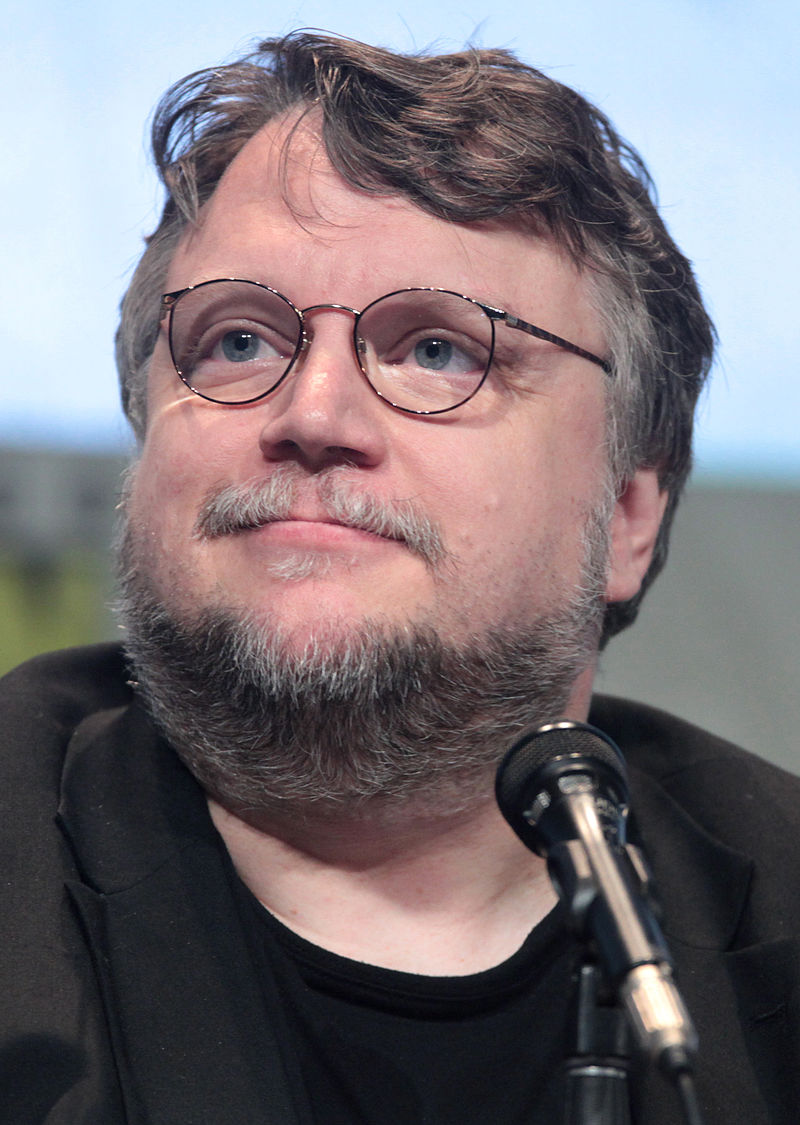
Guillermo del Toro by Gage Skidmore 3.jpg
For the purposes of this article I will be using the example of Guillermo Del Toro, who I believe is very much an auteur director. He has directed numerous well known and lesser known films, some English and some Spanish reflecting his Mexican/American life, such as; Hellboy 1 and 2, Pacific Rim, Pans Labyrinth and The Devils Backbone. Del Toro has a very distinct style. He often transitions between making big blockbuster Hollywood films to smaller Spanish films. Del Toro is a great example of an auteur director because you can immediately tell his films from any other director, dark fantasy settings with excellent practical effects, insectile imagery, clockwork, monsters, heavy use of amber lighting and some kind of religious subtext with the same recurring actors, all making Del Toro an auteur in my eyes. The effect that an auteur can have on the production is astounding, sometimes completely redefining the way the film looks, especially in cases of directors such as Del Toro and Tim Burton or Wes Anderson. When Del Toro creates the visual aspects of a film, he uses his previous experience in make-up and special effects to create the look he wants, using incredible practical effects rather than CGI to complete the look of the characters and monsters.


Image result for the pale manIn his most critically acclaimed film, Pan’s Labyrinth, he showcases all of the telling signs of a Del Toro film. The film takes place during the rise of fascism after the Spanish civil war in 1944, a dark setting for a fantasy film. This is one of Del Toro’s main aspects, setting his films in some dark setting and showing the dark beauty of a fairy tale in this time. The film follows Ofelia, a young girl whose stepfather is a part of the Falangist military. When they arrive at a new home, Ofelia discovers an overgrown labyrinth and explores it, discovering a faun who believes she is the reincarnation of an ancient princess of the underworld, and assigns her 3 tasks in order for her to acquire her immortality. So it’s quite a mouthful. It takes heavy inspiration from old fairy tales, showing the dark side of these to portray a sort of dark beauty in the fairy tales of old, one of Del Toro’s main points in his films. Throughout the film you can see traces of Del Toro’s signature style, in the look and design of the characters, using practical effects and make-up rather than CGI for the monsters, animatronics for the giant toad and minimal CGI for the tiny fairies. The use of practical effects, make-up and animatronics outweigh the use of CGI in this film, and most films by Del Toro. There is also a slight show for his love of clockwork in this film, as the main antagonist has an obsession with his father’s pocket watch. This is further shown in the first Hellboy film, as the character Karl Ruprecht Kroenen is a clockwork man, almost, using a wind-up key to make his heart work, and winding it more to increase his reflexes. You can see more clockwork in the later scenes when Hellboy battles Karl in a circular room surrounded by moving gears. This is expanded upon in the sequel, Hellboy 2 The Golden Army, with the titular golden army being an indestructible machine army, again powered by machinery and clockwork gears, even battling the main protagonists in another circular room filled with gears. Pans Labyrinth also showcases the use of heavy amber lighting during the scene in the Pale Man’s lair, and again during the scene is the underworld area. Del Toro also uses amber lighting in Hellboy, again during the fight with Kroenen. When all of this comes together I think it is clear that Guillermo Del Toro is an auteur director, all of these points combine to make a very distinct and recognisable style for a director of film, and it is easy to tell when it is Del Toro who has made a film you are watching.


Another way of spotting an auteur director is the way they use actors and how they often use the same ones over and over again. Del Toro does this with people like Ron Perlman or Doug Jones. Ron Perlman has appeared in 7 different productions by Del Toro, namely as the main protagonist in the series Hellboy. Doug Jones has appeared in 6 productions and is often used as a creature actor in his films, playing the Faun and the Pale Man in Pans Labyrinth and Abe Sapien, the fish man, in the Hellboy series. He has also worked with the same cinematographer, Guillermo Navarro on 6 different productions. The reason an auteur uses the same actors often can be different depending on the auteur in question. It can be because of how they look or act, or something as simple as they are just good friends and trust each other. This is just one of many ways to spot an auteur director, among many others. Many of Del Toro’s productions are easily recognisable just from the cast, if you see a film poster and it credits Ron Perlman as an actor in it, your first assumption is to say ‘Oh it’s another Del Toro film’ purely because so many films with Ron or Doug are. This is not the case, however, with all auteurs, as with Wes Anderson, who often uses a wide range of actors in his films, only occasionally using the same ones, often just for cameos, as is the case with his use of Bill Murray in The Grand Budapest Hotel. While Bill Murray has appeared in more productions by Wes than anyone else, 8 out of 9, he only has a cameo in this film, so the audience will not automatically assume it is a Wes Anderson film just because Bill Murray is in it, meaning the use of actors in auteur films can work both ways in spreading their auteurism.
Narrative Analysis
The narrative of a film can change drastically when a specific director or production company are making the film, however, the genre more often than not will define the way the film plays out, even down to some clichĂ© lines or scenes. For example, in rom-coms, the story is almost always the same in many regards, boy meets girl, they don’t get along, they are driven apart, and then they get back together and fall in love. Many films have tried to alter this formula but then the film may change genre to something else, or may not attract as big an audience, so the narrative of a film in a specific genre must stay similar to everything else. the reason the story stays the same throughout each different film may be because of what  In the film ‘Just Like Heaven’, the narrative is altered somewhat by the fact that it is a fantasy rom-com. It follows David Abbott who moves into a new apartment after the previous tenant, Elizabeth Masterson, was involved in a car accident on her way to a blind date. He begins to see Elizabeth’s ghost in the apartment. He tries to get rid of her through exorcisms but they begin to bond, until eventually David falls in love with her. After it turns out she is in a coma and will soon be taken off life support, David tries to steal her from the hospital, but she wakes up, not remembering anything that had happened between them. Later on Elizabeth returns to her old apartment and finds David on the roof, they kiss, and she remembers everything that happened between them, and they fall in love. Even though in this particular film one of the main cast is supposedly dead and is a ghost, it still follows all the main points of a regular rom-com, boy meets girl, in this case her ghost, they don’t get along, she wants him out of her apartment and he wants to exercise her, they are forced to be together due to some events that happen in the film, a man collapses in a cafĂ© and Elizabeth must tell David how to save him, they are driven apart when David is kicked out by Elizabeth’s sister when she thinks he is crazy, one of them realises they are destined to be together, it is revealed to David that the blind date was for Elizabeth to meet him, they try and get back together again, David goes to the hospital to save Elizabeth, they fall in love finally, they meet up on the roof and kiss. In this film however, they are separated twice, once when David is branded as crazy and is forced to save Elizabeth, although this is a minor point in the film, and again when she wakes up from her coma and doesn’t remember anything about the two of them. This shows a kind of cyclical format in the film, repeating the same point, although it still begins and ends the same way, proving who hard it is to break the mould of a solid genre narrative. Other examples of simplistic narratives in rom-coms are; ‘How to Lose a Guy in Ten Days ‘, ‘Serendipity’ and ‘Enchanted’. These films all follow the same structure as each other, but may change certain points to make them feel more original. Many people point out the simple and silly stories in these films, and say they are dumb films for dumb people. This is what happens when the wrong target audience see a film, it isn’t aimed at them so they aren’t attracted to it. Films can also use different types of narrative structure and different, out of the ordinary characters though these things are quite rare in rom-coms. Most of these films follow the rules set out in different theories like Todorov’s theory of narrative, in which he explains that most stories follow a similar path; they all start at equilibrium, go through a
disruption, come to a realisation, restore order and circle back around to equilibrium again. This can be seen in almost every rom-com ever, especially in Just Like Heaven. The beginning equilibrium would be when everything is going fine for Mark Ruffalo’s character, David, after he moves into his new home, the disruption would be the ghost of Reese Witherspoon’s character, Elizabeth, trying to kick him out, the realisation would be them figuring out they are in love, the restoring of order would be David saving her life and the new equilibrium would be them getting together in the end. This type of narrative structure is so easy to follow and spot when watching a film it is almost painful, but it works, it’s easy to keep up with and gets the point of the film across well. When it comes to Vladimir Propp’s theory it is a bit harder to pin it to rom-coms like with Todorov. Propp discussed that every film has the same kind of characters; the hero, the villain, the helper, the princess, the father, the dispatcher, the donor and the false hero. Propp said that every story has these 8 character types in them, but this obviously isn’t the case with Just Like Heaven. The hero is obviously David, the helper would be their psychic friend and the princess is Elizabeth, but aside from these obvious ones it is hard to point exactly who the villain is in this film, or who the donor would be. You could say that the helper doubles as the dispatcher in that he also tell the hero of the princesses fate and tells him he needs to save her. In other films it is easier to see, such as Enchanted, where the villain is obviously the evil witch, but not all rom-coms share this idea of covering every base in Propp’s theory. This can be seen as the smartest move a rom-com can make, considering the general audiences view on them, and can help to sell a film like this as being a bit out of the ordinary or different.